Wednesday, September 07, 2005

From Gdansk to Amsterdam just to pick up a passport. The people at Pniewo (PL) declares me a waiza. Guildehaus (D): “Excuse me, do you need help? We have an Englishman here!”

The week started in the old city of Gdansk. There, Kinga was my host. Kinga and Chopin are a couple who traveled around the world by hitch hiking from 1999 to 2003. After that they wrote a book titled “Led by Destiny”, that you can find find an order in the internet. Naturaly, I was all ears, altough soon realized that their philosophy was, as mine, that of letting the road biuld itself, without caring to much for complications that haven’t yet arrived. In the outside, Gdansk. The city shares features with many other hanseatic cities, like Lubeck or Amsterdam, and likewise the luxurious buildings of the commercial guilds of the time can be seen, true brotherhoods of sinlge yuppies, alma matter of the “pizza and champagne” (Argentinian slogan to refer to the new rich). You can tell they were single, from the state of sexual alert of the stone lion that holds the city coat d’arms. As my hosts were going on a weekend trip (Chopin was taking a weekend off from the Center of Buddhist Studies he attends near Warsaw) I passed to Michal’s house, another member of Hospitality Club.
Michal is 30. Her is a programmer. He belongs to the new class of young professionals that stills holds memories of the communist times. The second night coincided with the birth of the son of one of his friends, and I saw myself invited to a traditional Polish event for the ocassion: while the mother of the new born child stays at home the father and his friends down vodka bottles… Michal friends found it scandalous, before the fall of the Wall, waiting for a month to receive a TV, after queuing a full morning to apply for it by presenting cupons. Everything has changed now: they are not asked for cupons, but for money. Half Poland still don’t know what is that about, some say the fruit of a tree that grows in London.
With my Italian passport waiting for me in Amsterdam, and my contact in Amsterdam traveling in Italy, I had to collect the passport myself. So I had to hitch some 1,000 kms. On the first day of the trip, a town called Pniewo, tempted me from the window of the car I was traveling to Szcezin, and decided to stay. (I didn’t want to arrive to Szcezin by night). Each of the houses of the town seemed to have a farm, either derelict or working, in the back. European towns bear a realism that western towns hae lost. Even the most rural bastion in the Netherlands is a display of Barbie houses, with a tidiness and a perfection that are beyond the toleration point. People water their gardens and hardly look their neighbors Seems more like 3D graphics than real world. In Pniewo it was different. I entered a store, 5 drunks monitored my movements, I pointed a piece of bread (I couldn’t name it, I don’t speak polish or russian) and showed the 20 cents coin I had left. The man laughed, obviously it wasn not enough, but he gave me the bread the same. (I had changed my last zlotys to euros already). I said thanks in Russian and exited.
In a near by house 4 men discuss inside a car about the best way of reaparing a stereo. In a small town like Pniewo, a broken stereo is a good excuse to socialize. The women talked in the front garden and drunk tea. It’s the right moment to unveil my magic tea cup. I was soon sitting under a tree whose fruits were falling irregularly as a chaotic clock. When the stereo ws fnally repaired, conversation started. “So you don’t work? What do your parents think about that?” In a country where surviving is the issue, the concept of wandering in a professional way doesn’t take grip. The declare me “waiza” (God knows what it means in Polish) and the let me go the following morning.
In the german border I was delayed around 10 minutes. The custom officer there had never seen a passport with fingerprints. He finally laughed and said: “So fat is your thumb?” and gave the document to me with a new stamp on it. Coming from the Polish roads, the meeting with the Autobahn was a shock, so, with the whole weekend to kill time before the Italian Consulate would open on Monday, I decided to take some minor road, with no specific detination. A car stops, from the mirror hangs a dreamcatcher. His name is Stephen and is a farmer. He invites to join his family for the night. In five minutes, after loading provisions from a Getrenkenmarkt we are enetering his lands, in the town of Schmolln. His house defers a lot from the that of the text books farmers. It is an old warehouse recicled into a 2 storeys loft. Super. His wife Inga prepeares the dinner while the two girls (Luna and Billie) paint in their very own tiny table. In TV I see for the first time images from the disaster in New Orleans: people is killing for a glass of water. You only need a storm and all the bases of civilizations are swept aside. Inga sugests that it is part of human nature. I disagree, I explain her a few years ago a similar thing happened in Santa Fe province in Argentina and nobody was killing their neighbors But I undesrtand that, when the consume-dam is removed, some citizens of big american cities will canalize its competence instincts through agression. We talk about happiness. What makes us happy? Our family? The last Mercedes? Stephen says that in times of the DDR people were more friendly, they would greet each other in the streets. I remember the young professionals at Gdansk, so worried about being able to buy a TV set in less than a month. This is the sund of a different bell. Stephen also says that due to the low prices of property in Uckermark area, many young people from Berlin are arriving to found communities, and he is happy about that fact.
The journey followed with a very lucky ride in a VW Passat whose driver was traveling from Berlin to the Dutch border. That was perfect! Eventough he drove at 90 km/s, my driver regularly checked the timing of the trip consulting his wristwatch, after which he would say:”Gut!”, as if he were the captain of a steamliner. To be honest, the Passat wasn’t much faster than the Titanic, but the nautic gestures of the driver gave charm to a journey that otherwise would have been plainly boring. In the town of Guildehaus, 5 kms from the Dutch border, I was looking for a place to pitch the tent where a woman comes out of a balcony overlooking me and screms: “Sorry, do you need help? We have an Englishman here?!”. The woman was referrig to his fiancee as a torch or a forst aid kit! The Englishman, Martin, climbed down the stairs and invited me to stay the night with them. He had been a soldier at a nearby English base, met her herfriend there, and stayed. They were extremely hospitable and had lots of tea and my first shephards pie since I left England!. The following day I made it to Amersfoort in Holland. It was Sunday, and with the Italian Embassy opening only on Monday I decided to camp. Looking for a place I found a mobile phone, with credit. So I didn’t hesitate to phone my friend Steven. To my surprise he was in Delft. The beers were in the fridge. On Monday I was succesfuly collecting my Italian passport in Amsterdam. End of the story.

Friday, September 02, 2005

The tea cup makes wonders in rural Lithuania...


Next morning I said goodbye to my Rasta friends in Uzupis and hit the road with Gdansk as a target, on the Baltic Coast, in Poland. I had to go around the border of Kaliningrad, a Russian province in the middle of the Baltic Coast, which is to Russia what French Guyana is to France. In Vilnius there were another four hitch-hikers. One of them emitted such desperate signals that he seemed to be trying to land dome invisible airplane. I walked two kilometers along the highway and asked directions in a gas station to a guy in a Yamaha YZF600. Nathaniel spoke perfect English because he lived in Dublin. The Irish experience linked us, and he acceded to take me some 100 kms to Kaunas. The work exile of Lithuanian population takes to this situations, almost all my drivers speak some foreign language, even Portuguese in an occasion.


Today, however, I am going to meet a person for whom exile has meant something different. It’s night already, and I have decided to camp in the first village I stumble upon, not far from a town caled Pilviskiai. I see people around a house, who are listening to some music. It seems a party is going on. So I try the “tea cup” contact method. I am soon invited to join Saulius birthday celebration. In the garden there is a BBQ, and a table with sandwiches and vodka bottles. But that family celebrated something else: Saulius is professional soldier, and three days ago he came back from Basora, Iraq, where he had stayed for six months. With a scratch after having completed infinity of demining missions along with the Danish Legion, his family has reasons to feel glad. But not everything is joy. Saulius shows me his tattoo, a dragon with 13 crests, one for each Danish friend who died in combat. Lithuanians didn’t suffer casualties. We toast, I am happy my expectations were again surprised: I was waiting to camp under a tree and I found a birthday party instead. For Sauliuis, an uninvited guest that comes straight out of the road speaking English, a language narrowly linked with his particular foreign experience, is also a meaningful event.


I crossed the Polish border without complications. I leave behind rural Lithuania with its monoblock villages. I need two rides to make it to Gdansk. The first is a man who earns his living from exporting fertilizers. The second is a trumpet player and his family, rushing to a presentation in occasion of the 25th anniversary of Solidarity, the movement founded by Lech Walesa. Gdansk has a pride past of autonomy and prosperity. It was in fact Free City with the background of colossal Prussia and Poland. It was hanseatic city, and it afforded the sad luxury of triggering WWII and the extravagance of cauterize its wounds, when Walesa organized the first free Trade Union. It was night when I got there, with a 2 zloty coin that was actually a pocket leftover from a friend's trip to the country. A train ticket to the meeting place with Kinga was 2,72. The woman in the ticket office was nice; I jumped on board, and met my new hosts.

Postacards from Uzupis


Uzupis at daylight.


Night walks.


Uzupis - Arts Incubator. Nice metaphor.


Lina and Pukala, my hosts. They appear out of the blue, on the very same night I happened to become homeless in Vilnius.


Interesting framing.


Natural composition.

Bridge-bound in Vilnius, saved by the great people of Uzupis...


I had already understood that travelling implies a constant dislocation of expectations when destiny proposed a memory exercise. Vladas, mi host and founder of Vilnius Hitch Hiking Club, let me know he expected me to leave the house as soon as possible as a result, presumably, of cultural differences. “You are behaving like in a hotel!” he had said. Well, I had taken two eggs from the fridge and have them boiled, and also a piece of cake, since there was nobody in the house and I was starving. I had assumed that the mentioned items did not constitute a hard financial setback for my hosts, but I could have been wrong. My host later explained in an e-mail that you are not supposed to use your host’s resources without permission. By resources, he was not referring to a credit card but apparently to the couple of eggs. In Latin America we don’t complete forms to receive or give hospitality, or phone people to their jobs to ask permission for such things. The host would feel humiliated. A pity, since I otherwise appreciate Vladas very much for his commitment with building a hitch-hiking community.


In that way I meet again with Vilnius in a new way: homeless, bridgebound. I will always ask myself why the bridge has become such an icon of homelessness. In Argentina one thinks first in a petrol station if you don’t have a place to sleep. In Vilnius, after double checking that my friend Sigita’s mobile had disappeared from the universe, I headed for the center. Under the cathedral tower, point of reference of all appointments, a lot of people awaited other their dates. The joy of those who found contrasted with the frustration of those who didn’t. In the same place where Sigita and I had met in our first date, nobody waited for me this time. So I walked to mythic Uzupis, the art district. If a miracle was to happen it had to happen there.


I think it’s clear that Rasta is my protective urbane tribe. In Vilnius they underlined their status. I was soon befriended by a nice bunch of new Rasta friends. They all smoked Russian cigarettes of 7 eurocents a pack. What a delicatessen. Lina and her boyfriend Pukala invited me home. Ona, a friend of Lina, formulated the most specific question about Argentinean culture I was ever asked: what is the chupacabras? I am so surprised I can hardly answer. From their place I explore the decadent glamour of Uzupis...

Wednesday, August 24, 2005

The Baltic countries: Estonia, Latvia and Lithuania.


When the slow ferry left in Tallinn, the Estonian Capital, I hastened my pace trough the intrincated network of alleys of the medieval town. I was technically in Eastern Europe. Talking about the ex Socialist Republics gets complicated. To most of us these countries are indistinguishable.
.
Estonia, Latvia and Lithuania. The three countries share in a high degree its cultural background. In medieval times the area was under strong germanic influence. The Teutonic Knights, a religious – militar order retreating from Holy Land, found in the paganism of Lithuania (last european country to convert to Christianism) an excuse to invade the neighborhood. Part of the Russian Empire, the three countries were passed on into the USSR after a short breath independence in the 20s. They regained their soberanity in 1990. In 2004 the three all togheter joined the European Union, as witnessed by 200,000 Lithuanians living and working in London.

The three countries share, as natural consequence of all prohibition, the phenomena of unmeasured growth. This growth can never be equal for everyone, giving place to weird condensations, last model Mercedes parked among Ladas loaded with peasants and babushkas. In Tallinn, the Estonian capital, glass towers grow like mushrooms, the same to be obsreved in Riga and Vilnius. But set your foot out the city centre and you will find an army of unmantained soviet era appartment blocks, not to talk about great looking and gracefully crumbling 19th century buildings, its stairs arched by uncounted bolchevik and perestroikan paces.. There, in any moment, it seems we are gonna find Raskolnikov flying down the stairs after killing the old woman...


I made it to Riga in the car of a man whose case illustrates the “Baltic proximity”. He was a Lithuanian that was warehouse manager for Coca Cola in Riga and was coming from a business meeting in Estonia... Who better than him to give me a picture of what the people think of themselves. After 300 kms it turned out that the Estonians are the slow going lads, for what they are the target of all jokes, altough their the economy is the one that best resembles a western european one in the area. Average salary here is around 200 euros... Lithuanians (and here the driver talks about himslef) selfportrait themselves as warm (“italians of the north”) ans somewhat unproductive by Estonian standards. In sports, Lithuanian is basketball country, Latvia dies for ice hockey while Estonians are to slow for any ball sport. Other issue that come to light is the independence process. It was not an easy process for everybody. While in Lithuania everybody got the citizenship of the new country right away, in Latvia the goverment denied citizenship to all the population of Russian ascendance, no less than 40% of the pie. Thus, in Latvia, there is a subworld of second class citizens...


On my way to Vilnius I decided to take distance from highways and proceed on minor roads. The change was greater than I had forecasted. Automaticvally i found myself in unpaved roads, where cars were a couple of decades older than the european average. Cool. The towns, ringed by a mist of abbandonment, didn’t qualify to be picturesque. Ocassionaly horse drawn karts mixed with cars. And there i shed a tear. Everything was Argentinian enough to spark my homesickness. A German that gave me a lift put it this way: “It is a pitty that these countries are slowly loosing their culture (he meant poverty). In 10 years everybody is gonna have a new car and everything will look just like any other European country.” He doesn’t know that the people here want to live like in an average European country.


Afterwards, a man stoppped me as I was walking a minor road swearing me that a friend of him could take me to next town. 10 minutes later his friend showed up in a scooter... Mi backpack caused the scooter’s suspension to bend in a way that the men changed their minds. It is getting dark. I see two kids who were back from fishing in the river, and were holding a bucket full of small fish. They are cute and I take a picture of them. When their mother appears I show her the picture of her kids. She is moved, and proud, says that I can camp in their garden, under some apple trees. Next day I made it to Vilnius, and got to know that mi italian passport is delayed because the Consulate in Argentina hasn’t sent the approval, confirming that I am not Bin Laden. Ragazzi, my steps have found an anchor in you. The passport...that chassis of the soul...

Thursday, August 18, 2005

Berry-picking in Katajamaki community in Finland.


Katajamaki is only one of the more than hundred sustainable communities described in the 2005 edition of Eurotopia, a volume that each year compiles on going social experiments in the Old World, including info as its population, number of acres, decision making system, and property status. I had heard of Katajamaki in the Rainbow Gathering in the Polar Circle, from Touco, Katrii and Aleksi, three finnish guys whom I later visited in Jyvaskyla, their home town, on the way to the Community. In those days the guys were conspiring how to make money out of the sell of electric mandolines made with biscuits tins. Between line and line they realised the telephone number of the community.


Katajamaki is in the middle of a conifer forest, altoguh the same can be said just about every place in Finland. The main house where its 10 inhabitants gather for each meal dates back to 1905 and was the main buiding of a mental sanatory that functioned until 1917 and that used alternative (and controversial for the time) therapies as taking the inmates to tree houses for some days and colortherapy. Kiutso, one of the 3 survivors of the original experiment team, narrates this with pride, while the sun, childish, plays among the threads of his beard. Self sufficiency is the idea behind any community, and according to the degree it is achieved they can be categorized. Self sufficienccy as a contestation to the divion of work, in which the worker that operates the TV making machine changes his salary for cucumbers and the one operating the cucumber making machine changes his salary for TVs. The idea is to recover the lost conexion with the food we serve on our table, but they also thrust against the idea of private property, everything is owned colectively, the land, the animals, the money. The salary, in case a community sell part of their products in the market, is distributed according to necessity. The model is similar in some points to a kibbutz. Gathered all the members, decision are taken only with total consensus. In this context, I felt honoured when Kiutso asked me if direct trade in Argentina was still flourishing.


But one cannot visit this places and pretend to be an anthropologist and set to scribble lines in a copybook. During the mornings, with a bucket fixed to the body by a belt, we would sit by the berry plants to pick individually those mature, which were later kept in a freezer for the long winter coming. There was job there for an army, it seems we were milking an infinite cow. Somebody in the house was listening to a Mozart vinyl, human sophistication to accompany the most basic of tasks, receiving the fruits of the land. By afternoond we would walk in the forest to collect mushrooms, we would collect potatoes from the garden and prepare a nice meal for the group. In the house (that smells of wood and herbs because they have a large drying room) is always with some visitant. 


The community encourages visitors, curious leave not only a few euros or their work in exchange of their board and food but they also substitute the connectivity of the abbandoned and criticized city, at the same time propagating the communitarian values outwards. In the whole, Katajamaki seemed to me underdeveloped in relation to their potential. Which is good. There is lot to do, but finding people with long term commitment is no easy. Now, Kiutso and Ossi plan to extend the garden to the forset respecting the principles of permaculture, a discipline in vogue among contemporary organic farmers, and which aims to make agriculture and nature coexist.

To Helsinki I arived using the same sign that, attempting to say “Around the world” it merely stammered a “The world, around you”. I had already discovered the mistake, but I had learned from vendors in the streets of Buenos Aires that ortography mistakes are eye catching. My fisrt impression of Helsinki had nothing to do with helsinki itself, and it was happiness, or better stated, melancholy. After so many rural experience and hipie meetings I was I a capital city. That melancholy dennounced an umbilical stigma with urbanism I still suffer. Automatically I started to musitate some tango, the esthetic vibes, that impredictable radio, had tunned with the other capital: Buenos Aires. I awaked from the hallucination and walked trough the city, modern and scandinavianly boring. I had arrived to attend in time th star of the marathon of the Athetics World Championship… Masses of people in the Esplanaadi, that danddy boulevard, fisrtly made me shy to sell my poetry books to people sitting in benches, but then I was turned on by the absurd of the poet Neruda who I was reading and said “it would be nice to roam the streets with a green knife and shouting until freezing to death”. I stayed two days in Siljia’s and jani’s appartment. Siljia was the daughter of the driver that had taken me to Oulu, she had kindly offered me accomodation. With her and her two german friends, Annika and Laura we strolled around the city. Two days later I ferried it to Tallinn, Estonia. On the board, the Baltic States….

Wednesday, August 10, 2005

AN ARGENTINEAN IN LAPLAND


In Gamvik, the fishing village in Northern Norway in which I had been mistaken for a migrant bird and ringed with the number BA20016, the continent had ended. To the north only the Spitzbergen islands and North Pole. Time to set thumbs, dreams and sails southwards, to Istambul, a trip of several months trough all Eastern Europe with the whole of Finland still ahead. In Lakselv I stayed a night in the house of Anna, a local teacher who spoke perfect spanish and whose contact had been given to me by Birgitte in Slettnes. Anna also allowed me to use the photocopying machine in the school to do 35 of my books, enough to keep me alive 35 days more! And the I set off, towards Finland.


An easy way to know Finland without moving from home is to imagine a pine: strong, tall and green. When we have this pine, we only have to multiply it for one billon. The we add an horizon line, some 40000 lakes and that’s Finland. These lands are not deserted: several millon reindeers and some finnish people live there. It’s still not clear how finnish culture has been able to develop in spite of the reeindeer. Some historians also point that even sauna, the finnish national pride, may be nothing but another way of the primitive finns to escape, for some minutes, the reindeer. In north of Finland, called Lappland, another race, pristine, native from these lands, has made the reindeer the center of their subsistence. I have met them before in Norway, they are the sami.


Inari, Ivalo and Vuotso are the three sami villages that I crossed in my way south. In Vuotso I decided to stay the night. From the road I had seen a family gathered around a fire behind their house. To make contact this time, I used a new technic, tea cup in hand I approached them and asked for some tea. Aki’s family understood that I was asking for much more than tea, mainly for company and some place to stay. After the vainilla twinings the beer arrived and then a terrible rain that made us move the fire into a tipee. Only inside the tipee I was asked my nationality, and even in this latitude when they listen Argentina they say Maradona and they do the mimic of “the hand of god”. We could plant bananos in the whole of our country and declare the skateboard only valid public transport, never mind, they will always know us for Maradona. I was asked what did I know about Finland, so I told them, that they had kicked stalinist troops out in an efficient way, almost using stones,that they invented sauna and that they had invaded the whole world with tiny Nokia phones. I was slow, I should have declined the offer kindly, but it was too late, Aki was standing, shouting “sauna, sauna!” and his family prepearing the sauna for me. Inside, Aki poored inmense spoonfuls of water over the heated stones. He seemed to be giving soup to a dragon. I thought I was gonna volatilize in the 10 minutes I joined Aki in this cruel finnish hobby. But I survived and that night I had a bed waiting for me.


After 4 hours, the following morning, a car stopped in Vuotso. It was a local sami girl called Saara. Saara split her time beetwen reindeer herding and studying International Relations at Rovaniemi University. Saara thought that using snowboards to work with the animals doesn’t imply a loss of traditional sami values, or the vanishing of their culture. On the contrary she thought that the problem were the southern finnish that still want to see the sami as primitive people who chase reindeer with skiies and live in tends. I am sure the sami are pretty sure of what they are, but in a touristic level, unfortunately, this is the image they give of themselves, converting themselves into their own stereotype, acquired reflexevely trough the expectations of the southern finnish in daytrip from Helsinki. The same happens in the Quebrada de Humahuaca since the mediatization of the Tilcara Carnival. Evverything seems to be about cactus, weaven things and llamas. This takes us to the question if it is possible to contact with corrupting. Can we talk even today about a natural line of development for native people around the world?


                                                     ¡Extraños vehículos que se ven en Laponia!

I stayed one night in Rovaniemi, I wanted to talk more with Saara. She explained me that the rheindeer was so important in her culture that when once a woman from her village married Finland’s second richest man, the townman who arrived with the news said that “the man is very good with computers but doesn’t have any reindeers”. I am still surprised that Saara didn’t earmark me as she does with her animals. Having been ringed in Norway as a bird, I was already afraid that I would arrive to Istambul bearing dozens of marks for different kind of cattle, rings, bar codes, etc.


To Oulu I arrived in one ride in Kari’s car, who lent me his laptop with wireless internet to contact on the spot members of Hospitality Club. Kari stopped for me also with the porpouse of educating his 12 year old son, who was also in the car. A really open minded person. So in Oulu I stayed in Passi’s flat. Passi had just arrived from a year in Ireland and spoke english with a funny western irish accent. These were rainy days, so I mainly stayed home to write.


From Oulu to Jyvaskyla I traveled with Esa. Esa had been in the UN peace corps before becoming a pacifist, and now was hoping to get a life in Lappland permanently. He took me to Katriina’s Touco’s and Aleksi’s house, a beautiful and relaxed place I really enjoyed. I had met them in the norwegina rainbow. When I visited them they were analysing the possibility of building home made electric mandolins with biscuits cans, in order to get some cash. Those days passed timeless, oppoertunity for inner travel.

Tuesday, August 02, 2005

Frozen bread, black Porsches and migrant birds in Slettnes, Finnmark’s far North.


How dou you say “the end of the world” in norwegian. You say that “Finnmark”. Even if the name makes unnecesary any further explanation, let’s say this is norways far North, Europe’s northermost territory. The landscape is barren, with an average winter temperature of under 10 C. In spite of this, a handful of norwegian and sami people strive to earn a living from this nature, the first fishing and the later reindeer herding. In 1944 the retreating nazi army burn everything to avoid the advancing russians to find any kind of shelter. Those refusing to migrate south were shot down. That event is still a stigma: no construction predates the 1950s. In winter people stroll in their snowmobiles (if you don’t hace one you are not in) or practice ski. There’s not much more to do.

In this land I was hitch hiking after the Raibow gathering in Dividalen. To memorize the name of the fiords that the road passes one of my drivers suggested a nemotechnic that he used with his kids: “a-po-la-ta-ba” (Altafjord, Porsangerfjord, Laksefjord, etc). While for the average tourist the series evokes memories of homogenous experiences, I was still to discover the wide range of things I was to live, walking from fiord to fiord, sometimes as much as 15 kms a day, hitch hiking if vehicules passed, as I did my way to Gamvik, a tiny fishing village in the far north of Nordkinnhelvoya penninsula. I was to explore all degrees of fortune from empty cans collecting to whale biff.

Even before reaching Altafjorden I met Gun and Salah (she, norwegian, he algerian). They stopped for me on the road and shortly after we were having dinner in their mother’s house in Nordstraumen. Her family had a long tradition of helping travelers, sometimes ven giving them some job in the farm. So, the dinner was exceptionally sophisticated (better than the half pack of biscuits my dinner would ‘ve consisted of) and included this flat fish whose name in english I ignore, but it doesn’t matter, there is only one fish which is flat… The flat fish had been captured in the same fiord. Gun’s mother silently orchetered all the hospitality from a corner in front of her TV, without speaking a word of english, and she took care of every detail as much as Gun and Salah. Before letting me go, the following morning, they gave me a pack of sandwiches of herring, salmon, flatfish and dry rheindeer meat (delicious). The first driver of the morning donated the beer abd thus I walked happily, probably with the vipest load of food my backpack has ever carried.

I arrived to Alta, main and only city in Finnmark, owner of a square and cheap modernism (again the german’s fault), with a terrible rain that wasn’t gonna let me alone for two days. It wasn’t the ideal weather for camping but the precious snacks I was carrying motivated me. But I didn’t have the chance, a local man I asked where to camp took me to his house, He was engineer in the local power plant. By evening I was drinking brandy with his family + curious neighbours arrived to meet the southern man… I Alta, that unfrequent card of the hitchhikers tarot, the washing machine, arose. (there were socks waiting since Sweden) Also in Alta I got to know trough an e-mail that my pans, forgotten in the Netherlands, were taking by a friend by car to Srajevo, Bosnia, and are waiting for me there….

Oh fortuna, velut luna, status variabilis” is the first verse of Carl Orffs’s Carmina Burana. And in the following days the moon was to change. It didn’t stop raining for a second, temperature dropped and trafic extinguished. On the 28 I arrived laboriously to Porsangerfjord and locked in my tent at 6 Pm, unable to resist the rain for a further minute (and I consider myself Ireland-proof, but that was too much). At least four rheindeers were lying at 50 mts from my tent. On the 29 I reached Lakselv, another town in the same fiord. I was walking all day under the rain with my water bag full of hot water and pressed against my face to keep me warm. (I had to asked for new hot water every 15 minutes). I also collected every empty can I would see (you get 1 kr for each). I camped behind a big wooden pale blue house near the fiord, beautifuol and abbandoned.

On the 30th I arrived to Laksefiord and stayed the afternoon in a sami settlement, helping to organize the rheindeers labels (they were gonna be marked). Sami people keep a semi nomadic life, living in the inner Finnmark in winter and taking their herds to the shores to graze in the summer. They really live up to date and even use helicopters to trace their herds. Some people expect the sami to live as picturesque primitive people and deny them the possibility of progress, so they can be nice thing to look at during holidays….

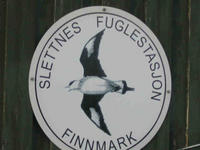
I thought it would take me a week to reach Gamvik, but then a constelation of nice events happened. I said goodbye to the sami family and started to walk. I had the hope of buying biscuits on the way, but some place that come up on the map are not towns at all, but the product of optimist cartographers. Nothing did I cross in 20 kms and went to tent dinnerless. The following morning I arrived to Lebesby with only one thing in mind: buying food. But it was Sunday, I had forgotten that detail… so I had no choice but to knock doord and ask for bread. The woman in the first house didn’t speak any english and wasn’t very helpful either: she came back with a big piece of forzen bread, rock frozen, bagged and smelling of salmon. Closer to murder than to gratefulness I addressed my fists to the second door. I still didn’t suspect that that rock hard bread was the first move in a hospitality domino effect. Because Pal’s familiy in the second house not only had bread to offer, but also they invited me in for a shower and a nice hot lunch. It was a numerous familiy, and during the year the all lived in Nepal. So also a door was being opened in Katmandu. That was the first miracle of the frozen bread. When I was about to set sails and thumbs to Gamvik they decided to visit some friends of them there, taking me some 100 kms to the place. Their friends lived in Slettnes, 2 kms north of Gamvik, in a WWF Migrating bird ringing station. Their names were Roy and Birgitte and they were ornitologists.

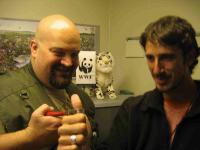
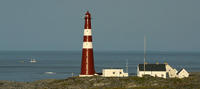
The 5 of us had tea in the compact, observatory looking station, in the middle of a plain which only other construction was the Slettnes lighthouse, the world’s Northernmost lighthouse on the mainland. I was first introduced to the basic aspects of the habitws of some of the 160 bird species that inhabit the area, some of which come from as far as Antarctica. Some other notably come only in the dark winter months, when it seems there’s no life at all. One hour later Roy had decided I should saty in the exclusive guesthouse that operates in the former’s lighthouse keeper’s house. His experience in Middle East more than qualified him to negotiate the price and make it plummet to less than half of the original. He ninvited me and I couldn’t decline the extravagancy of staying in the first class place. The guest house owner was also surprised of my journey, and invited me some extras, as roayal crab, speciality from the region, that I could have never payed myself. Another plate I had the chance to taste, this time invited by Birgitte, was whalebiff. All seemed to be too much. I had only knocked the door for a piece of bread.

During dinner Roy told me a bit abour his life. As a scientist he jas worked in dozen of countries from Yemen to Iran, in each of which he is happy to give me contacts. In top of ornitologist Roy works as a psicologist, and his concept of life as a game is fond to me: “I lived three months of my life throwing dads to take each decision”. That lightness of being didn’t stopped him from pregressing in our mundane material world, fact witnessed by the black Porsche Boxster he insist to drive at 40 km/h in the unpaved roads of Slettnes!!! Duriong the weekend Birgitte took me in the Porsche to visit some friends to Kjollefjord. When we would hop off the Porsche some young lad would rise his thumb to express his admiration for the bolid. How to explain it was all the fault of a piece of frozen bread?

The last night was emotive for me. We were in the station when Roy and Birgitte decided to give me a souvenir: one of the rings used for migratory birds. He took the special plies, my finger, and pressed it gently. In the metal the name of the station and the number BA20016 are engraved. We also know because of the records that 20015 was a cormorant. The situation was like this: I had reached the extreme north of the world, where fisrt I had been given old bread and then somebody had taken me for a bird and had ringed me. I know I haven’t shaved but… do I look like a bird. Or maybe it’s just that people in this area, so unvisited by tourist expect any arriving being to be a bird! Well, personally I don’t know if I deserve the honour of being compared with the ilustrous birds that cross oceans and continents each year,, but the metaphore planned by Roy’s sensibility fills me with pride. Still to be seen how far I can fly.

Hospitality in Finnmark

In Gamvik bus station I had the pleasure to had a rather quick chat with Vegard Valberg, from the town’s museum. According to Vegard, when the first guesthouses opened in Finnmark in the 19th century, locals complained that people should get hospitality for free. It was the beginning of tourism. More info can be found, in norwegian language, en el libro “Nesselkongene” (Knutsen, 1990) about the process of trade dinasties and guesthouses in Northern Norway.

Sunday, July 31, 2005

Chasing hippies in the Artic!!! (Rainbow Gathering)


I have been living in a week-long day which only my biological clock fragments into periods of sleep and awakeness. It’s summer in Northern Norway, the sun shines at midnight, and five past twelve is already sunset. I stayed in bodo for two weeks, with Mohammed and Josefina, two local musicians, Bodo itself is rather ugly, with the average harbour infraestructures at least giving the town a very artic feel. When a local journalist asked me if I liked the town I thought of a chocolate cake and sayed yes with the head.
I had to move, I was still 450 kms away from the Rinbow- Ting hippie gathering, but the second car that stopped for me was that of our norwegians with the genuine offer of trekking over a glaciar inside a cave, and I couldn’t resist. Obviously that night I dodn’t get very far and just camped by the side of the road.
The next day I could see the first effects of the interview with my picture in Bodo newspaper: a amn stops because he read about me in his breakfast, and the officers of the ferry operating from Bognes to Narvik welcome me free on board. Travelling along the E-6 is sets me nostalgic: narrow road but well kept, lakes and fiords, mountains with the last snows, scarce towns and little traffic: everything indicates a nordic sister of the Route 40 (suns for 4,667 kms from Patagonia to northern Argentina). When on the way to Narvik I traveled for the first time in this 3 months in the back of a pick up, the similarity became unbearable. A petty the prices don’t join the game.
Narvik, another gray harbour in a dramatically beautiful fiord, was the artic sanctuary of many nazi battleships. There, loyal to my “spend 0” policy I changed accomodation for a mention in the website of the project, in the hostel where I slept (Spor 1 Guesthouse http://www.spor1.no/)
The Rainbow Family meeting was located in the very end of a valley called Dividalen, which is 50 kms long, in sami territoriy. The samis are the last european indigenous people, they live from rheindeer herding, but they live up to date, with mobile phones and Volvo’s. My first impression when I got to the meeting, with a polich hitch hiker (Maciek) that had joined me, was that I had reached an uncontacted tribe. A couple of dozen people were talking beneath a fire, around there are several tipees. When they see us they shout “Welcome home!” A second look was required to confirm that those nice people belonged to my same time and culture, maybe because of their succesful efforts towards a timeless esthetic. Most of them went barefoot, most of them had dreadlocks, beards were long. They are students, they are mothers with children, they are middle age men. They are european, they are japanese, they are Southamerican. They seem excesivelly cultured and aware, and they think (and I agree) that in some stage we took the wrong turn and that we should trade big cities for small self sufficient communities. They consider themselves a family and they nickname the outside and corrupted world as ‘Babylon’.
I had started tto talk with an icelandic guy who blamed the patriarcal society for all our pain when another arrival happened: a blonde, moustached american guy that dropped his backpack and hugged three of us as if we were his sons. In general there is a kindness and a human warmth that babilonics have long since lost: any eye contact can spark wide and cuasi idiotic smiles. Others live, three swedish guys set off walking for their country (3 days)
In a moment we moved to another fire, near the river. There, Eduard from Romania did a kind comment about Borges, so I thanked by praising Cioran. In the group, in which scandinavians are majority, many speak spanish and have lived several months in LatinAmerica. It’s nice to see american, swedish and french using Spanish as common channel. After the first day my conclusion is that, if Christiania was a revolutionary place, the Rainbow Family was defenitly the “Foreing Legion” in charge of exporting that pride, of keeping the fire alive. I went to sleep just when many others were waking up. The absence of night takes people here to slep rather randomly according to chaotic schedules.
The ‘family’ as any human group also has rituals. By lunchtime we all did a “food circle”, and took each other by the hand to sing: “We are circling, circling togheter, we are singing, singing our heart songs, this is family, this is unity, this is celebration, this is sacred.” It’ s our way of thanking nature for the food we are about to eat: polenta with apple and raisines. Alcohol is banned.
That night I had the opportuniy to join a “vision circle”, in which one of the ‘brothers’ announced a vision of a big meeting in the Altai mountains, in the border between China, Kazakhstan and Mongolia. The visions of future meetings should be ratified by absolute consensus in previous meetings. People talk one by one as a ‘talking stick’ is passed to them, never interrumpting (in theory, with some exceptoins) subsequently giving the right of speech to their neighbours. The melancholic american girl ended talking about nomadism and Flavio asks please to focalize on the vision, just when the ‘talking stick’ reaches the french guy with turbant who has just arrived and knows nothing about the gravity of the issue, so he seats, takes the stick to this forehead gently, closes his eyes and announces that he visualizes a yellow eagle. Flavio asks again please to leave our eagles out… All that day people was talking about Altai, about the visas, about a truck that the someone of tha family had in Marocco and that could be used for the long trip there. Miki from israel and me think the same, we should set the stress in communities, the meetings are necesaary but are picnics in nature that will not change the world themselves.
The last day (it’s a metaphor, it’s always day) started with a surprise. I wasn’t the only argentinean. Candelaria has tavelling since 1989. She is 41, and her daughter Paula , that was born in Costa Rica, is 5 and can even speak some english. “I saw Menem caming to power and I rushed to buy the ticket”. In the city, one always comes across people that never hot the road or people who did it but came back rather soon (these are anyway those inspiring us). Only in the road we meet the people that made the road their home and movement their air. Cande shares a ‘mate’ with me and tells me about a French family she knows who is having problems with the state because they don’t want to send their child to school, because they are always moving and the child is anyway learning really important things with them and the people they meet. I think in concertino, the german man who has been travelling for 25 years with his bandoneon and his hamag. I also met him here. Some examples can be too much for a single day, I have better go to sleep.

Thursday, July 21, 2005

Homefulness in Gothenburg. The three Thors in the E-6. Midnight sun in Bodo


Taking distance from Christiania was difficult, but I finally kept on with my original plan, that of traveling Scandinavia clockwise via Nordkapp, the northermost point in Europe, land of the Sami, europenn last native tribe, and of modern home german tourists. In spite of this, Nordkapp dropped to second row when somebody in Christiania said that the Rainbow Family was gathering somewhere near Oslo. The rainbow Familiy has been gathering people al around the world since the sixties under the ideals of peace and respect for nature. The exact coordinates of the event were unknown. It seems as if the organizers trust Freya will lead the travelers into the right path…. And if you don’t get there is because you didn’t have to be there. The only thing we knew is that the gathering will be on going all july and that it actually was a re-edition of the centuries-old tradition of the “Ting”, popular councils of pagan times. Towards it I directed my intention even before my steps.
Entry to Sweden was made in the car of an afghan exporter who gave me his telephone in Kabul. The following drivers were peruvian, estonian and palestinian, and that gave me a parameter of what I coould expect from Sweden in terms of hospitality. This, added to prices that invite to ascetism (U$D20 for a pizza) caused a first pesimistic day. That day I made it to Helsingborg after having waited for near 3 hours in the road. There I camped in a park by the sea that was crowded but gradually cleared. All of Scandinavia’s national territory is technically free camping space (it’s called the right of all men”), so when I doblu check with a policeman, skeptic myself, he laughed, said yes, and wished me a pleasant stay in Sweden.
The dollowing morning I continued to Gothenburg. There Gunilla was waiting for me, but she left to visit her parents and leaving me her appartment for two days, fridge and internet included (thank you!!). Homefulness was something I had honestly forgoten. Still obnubilated by Christiania I paid little attention to the city, which seemed a bit mediocre to me. Sure it’s a cultured city, but still a normal city with malls and stuff. So I limted myself to strol around the harbour.
In Gotenburg I got to know trough an internet forum that the hippies were meeting not near Oslo as I thought but in some settlement lost above the Artci Circle, and I tooked the decision of going there giving Bergen and other more obvius attraction a great miss. I try to make an ode to mevement out of this trip, not just a rosary of postcards. I promised to let myself be guide more by intuition that by the Lonely Planet. I also took the decision of not spending any more money that I haven’t earned in the same day. With this prices I declare myself in strike. So, I started to offer “Harmony of Chaos”, my travel story book to my drivers.
Trusting provindence I left for Oslo, with zero norwegian kronen in my pocket. In the way a bus stopped for me taking me some 90 kms for free, the a man that bought my book in 100 kr (thank you Klaus), then a vangardist artist (he called himself the Art Ranger) who lived in a camp near Frederikstad in an old russsian army truck and who invited me a pizza and finally a turkish man (Ozdemir) who left me in Oslo Bus Station and even gave me coins to call him if I couldn’t find my contact in the city. I stayed only one night in Ligas’s house, a latvian girl volunteering to convince the norwegian people of joining the EU. I advicesd her that if her really loved Norway she should convince them of talking to each other to prevent extinction (they are 4 millon with an average of U$S50.000 in the bank each).
In Oslo I started my pilgrimage to the Artic Circle. Endless pine forest cover the territory, soon mountains appear, which tops still harbour snow. At the side of the road signs alert drivers of the presence of Muss, the “king of the forest”. I got two rides with guys whose names were the same: Tor, like the viking God of thunder, and in Fagernas I got a ride with my third Tor!!! The third Tor asked me where I was going: “the northernmost possible” – I replied- He was going to Bodo, far in the North, so we drived more than 1000 kms togheter, and what a better guide to Norway that Tor himself…. In Dombas we stayed in a motel that gave me a free night accomodation in exchange for publicity on the website. You can contact them on http://www.slettenmotell.com/
One hour after crossing the Artic Circle we arrived to Bodo, an industrial harbour in a big and scenic fiord. Mohammed, the norwegian musician that I had met in Christiania. You can check their cool ethnic music out at http://www.batty.no/ . With Josefina (the band’s singer) and him we drove to a cliff at 23:45 to see the midnight sun. The sun went down to the horizon line, attempted to sink, and rised again. “Good morning!” –said Mohammed- It won’t get dark until next september. Welcome to the North” . Mohammed also informed me that the clip was a norwegian invention…. Their house was great, with a big carpet with a Buda on the wall, bongos, vinilos and lots of vegi food, and of course..them!! I will stay in Bodo for another “night”, I need to do washing, write this report and get ready to march to north of the north.

Sunday, July 17, 2005

The Mercedes of the turkish shoe maker goes off the motorway. Christiania: fatherland of those emigrating from the system.


My entry to Denmark was untidy, it started as a ballet movment but dropped out as bowling strike. In fact, I entered in the Mercedes of a drunkmen turkish man who had just had 25 beers, with the predictable consequence of almost rolling over and ending off the road (I was quick enough to get the wheel myself). As compensation he payed the dinner and that night and camped in a park in Odense.
The following morning my stomach took me to the supermarket rather than to the road. Denmark is not yet in the eurozone, which accidently made me discover how to shop for free. The method implies asking a random person if he could change you a 2 euro coin into local currency. Normally people wants to help so they give you some coins but don’t accept the 2 euros, and the same coin can survive several breakfast and lunches.
In that way I arrived to Copenague. My plan was to stay there just a couple of days. But I discovered Christiania, a section of Copenhaguen that, after funtioning for centuries as militar barracks, it was derelict and subsequently occupied by pacifist, unemployed, junkies and hippies in 1972. All people in genuine search of an alternative social space. The following day a left wing newspaper comes out with the headline “Emigrate with bus number 8”. Against all odds (everyone seemed to be quite sure that the area was gonna be just a shelter for shoplifters and junkies) and after surviving several police raids, Christiania gained its right to exist as a social experiment and now counts 1000 inhabitants which are highly organized into a free town with its own currency and so on. Danish government present atittude towards the Christiania issue is to kick them out: 85 acres in downtown Copenhaguen are a real estate temptation. So slowly measures are being taking, as forcing the inhabitants to take a legal address (so from now on Christiania as an entity doesn’t exist anymore and we can understand what individual rights were always intended for…)
The first thing you see when you ger in is a sign that when you look at it from the back it says: “You are entering the EU” (in reference to Copenahaguen. Another signs says: “Say no to hard drugs”. Saying that in Chrstiania everybody smokes hash without, even in front of their children, without moral dilemas, is to reduce things to a single dimension. The point is for me that it’s a space design to live and not to consume. All the town is pedetrian area, people move around in bicycles, and trash is recycled. A big factory whose chimney has been covered by vegetation (what a metaphor!) houses several flats as well as a café. Opposite it there’sa tibetan stupa and a large parke where corwds sit to read a book, eat out salads (everybody seems to be vegetarians), smoke, jaggle, etc. When police is around people’s attitude rasumes their philosophy: they do “om” all together to keep the off…
Christiania is by force a meeting point for people in spiritual trips. We all look for a way out and we try all sort of keys. I could prove it, I stayed all week in the house that a group of people were inhabiting near the lake. They were Kir, blonde rasta danish girl, pacifist and owner of the VW van, she spends several months a year volunteering in Cambodia; her friend Maya, danish, taoist, with whom we shared the idea of letting the flow of the universe determine our steps, Helga (only Christiania citizen of the group), Lisa and Nina, to whom I helped to build a metal ostrige for a circcus event I will never see.. And there was also Mikkel, from Sri Lanka, who also thought someday to start a self sufficient community. And many other norwegians, spanish, dreamers, lost ones, they all promise to leave and next day they are meeting in the park and saying to each other: “still here?”. The place is sticky.
In the evennings we would go dumpster diving, that here throw away packed and safe food, God knows why. Parasiting the system we complain about doesn’t seem to be very coherent, but it’s good for my budget and all those bananas and apples and vegetables don’t have the fault and should be eaten, it’a matter of respect for the food. At night we would grill everything collected and it was hard to believe that all that delicious food was basically from the bin. Little did I get out of Christiania during the week, and one of the times it was to print my book, that finally is ready. I finished it in Claudio’s house, an argentinean exiled in Denmark in the early 80s, who never came back. He lives from social security, in haooy loneliness. Lot of people that fought for liberty in our countries are here. That’s why when we attend a concert in Southamerica we only see under 40s. Where are the missing ones?
Christiania shows the world two things, that rebelion is not generational determined, and that the hippie movement didn’t collapse, it is just suffering a low tide. So I exited Denmark, without having ever changed a single danish crown but with cash, thanks to the books and to the providential finding of 400 DKR in the street.

Friday, July 01, 2005

The argentinean virus in Holland. “Mate” in The Hague. BBQ in the squathause at Delft. Walking over the water in the North Sea.


Considering the size of Holland, its people has done many tricks. When thinkinf of Holland some conjure up the famous wind mills or colourful tulips. The postcards have the fault for that, but these guys also founded New York (under the name of New Amsterdam, before being elbowed out by the British) and Big Brother (yes, Dutch idea). Other things were not invented but improved, as bicycles (not only each street has a parallel bike path but also cities are linked by them). Other Dutch delikatessen is legalizing everthing that has been forbidden for centuries by Roman right: private property finds a nice stop in the right to squat houses whose owners cannot keep in inhabitable conditions. And legalized marijuana deserves a separate essay. Enough with saying that half of the drivers were smoking and driving without worries. What an irony that with all this legal relax it’s to Holland where you go if you behave really bad (ask Milosevic).
Mi friend Stephen lived in Delft, a small managable, and old nice city, with it’s mandatory channels crossing it, it’s burg houses in flemish style and a couple of 13th century churches/ The first hing I saw when I entered his house was a pack of yerba (Stephen has Dutch passport but blue and white heart) and a cat making unreturned caresses to a beer box. The first day was for nostalgy, we remembered the time we both walked to the town of Crotto (in Argentinean Pampas)… The wines are just like wines, they get better with pass of time.
On Sunday we rode our bicycles to The Hague, where there was a free muscic festival which was attended by 100,000 people. There, wuth perverse pleasure, Stephen took the “mate” out of his backpack and started it. In land of free marihuana the old yerba caused a magnific interest and a prportional deception. They would get close tiptoeing to see what our strange pipe was, asked if you could get high and went back to their places. Big news during the concert: Maxima, the argentinean born Dutch princess has had a new son. People clap… but it’s not mine!!! I swear!!!
The conspiracy’s agenda said on Tuesday we were to do an asado (large argentinean BBQ with steaks and stuff). This was carried on in the squat house at Nieuweelaan. It was the first asado I did in the shadows of the law, since dutch law banns fire… But the steaks coocked well anyway. While we eat we talk. Stephen is tired of working in Holland. As an hidraulic engineer his job is to calculate the impact of a 5mm water level rise in 2114…. And he feels his job is useless to the rest of mankind, so he is evaluating accepting a job for the UN in Chad. That’s why you worked in Argentina? “Yes – he answers- but there the more expensive my project was the merrier for the government”
Two days were used in getting a new italian passport in Amsterdam. I went and came back in train using Stephen’s month pass and smiling without saying a sinlge word to the inspector. My italian passport went missing in a letter from Dublin to Milan. When the new one is ready Stephwn will post it to wherever I’ll be. So far the “blue” (the argentinean one) goes unscatched, with the syrian visa and a rather lost looking swiss entry stamp. The italian ID is used as ajoker sometimes should I prove my tecnnich europeanhood… That’s what I call “selective invocation of grandparents”
The week ended with an attempt to walk to one of the islands in the North Sea during low tide. Something like the dream of all hidraulic engineer… to feel like Moses as the watera give way. We moved to Gronningen for that. The driver that took me there pick his girlfriend up in a sort of transitory camp with many old circus wagons used as houses. More people looking for a way out of this system. I loved it. So we finally started our water trekking, with maps and GPS, but half an hour later we had the water in the neck so we went back. As you see I carried the cross in Dysseldorf but failed to walk over the waters. I am sorry to upset those who saw in me some kind of mesihas. But multiplying bread I do it quite well. My original budget was 5 euros and thanks to everybodys hospitality I couls reduce it to 2,60. The disaster of the week: the toothpaste opened in the backpack… I set off for Denmark


Tuesday, June 21, 2005

Soccer in Dresden. Carrying a cross in Dusseldorf. Arrival to Holland.


Week number 7, country n.10, city n.22, car n.100. The week started with my arrival to Dresden, in Saxony, Germany, famous for having been reduced to rubbles in a febraury noght of 1945, in which the most devastating conventional bombing in history. During DDR times the area was known as “the valley of the people who don’t know”, due the city’s to deep location to receive western TV waves. In Dresden I was waited by Veit, founder of Hospitality Club, a free accomodation exchange website with 60,000 members worldwide. That explains why I don’t use hostels and people is waiting for me in every city I go. It’s two years since argentinian backpackers organized in http://www.autostopargentina.com.ar/ have been pushing the Club in the latino web space, so meeting each other in the real world was something in the to-do list. Since both of us were quite busy with web-related projects we quickly adopted a rutine. We would wake up and turn our laptops on even before thinking in breakfast. This rutine had two major exceptions. The first when a heat wave pushed Veit out of his bunker and onto his grandmas’s pool. Surprise for me, shameful latin in a land of retired hippies, his gradnma was a fierce naturist and didn’t allow anyone to walk into her house with shoes, or into the pool with bathing clothes. The second time off was going to the Altstadt to see Argentina- Germany match. The Dresden Altstadt, or Old Town, is only now completely rebuilt after 50 years of looking like an abbandoned building site. In the bar all they were all germans, so I had to wait for the goals to unveil my small argentinian flag.
I arrived to Dusseldorf on Wednesday. Dusseldorf is one of the cities of the famed Ruhrgebiet, heart of german steel industry until the 50s, an amazing net of urban tissue in which no less than 10 cities have over-fenced their neighbours to become just one big amorphous mega city of 7m people. I was taking there by a bussinesman anxious to change his life. We talked about time management in our lives, He said: “Death is a good consultant” when I suggested the idea that, if given 24 hs left to live we would reconsider the way we used our time. Sanna waited for me in Dusseldorf, a swedish student that lived in a students resident with other connationals. I had to enter and leave the premises using the backdoor. The girls at the nicknamed “swedish embassy” were keen on preparating a midsummer party-bbq to celebrate the longest day of the year, loyal to that nordic costume of feeling grateful to life whenever temperature reaches 21 degrees. The celebration consisted in, according to Sanna’s words, dancing like froggs around the middsummer tree, actually a wooden cross festooned with leaves and flowers. With such a program who would even think in the cinema… Iy’s the kind of activities which I regard as extremely important and worthy of all international cooperation, so next night we were roaming the Rhein’s shores in our bikes and depredating its flora (tradition said no less than 7 different flowera should be part of the ornates). Sanna had already sketched the midsummer tree, and with that IKEA-spirit the tree was rady the following morning. Just that it was actaully a cross. “And how do we carry the so-heavy cross on our own?” I was easy prey of the persuation that a couple of swedish barbies can operate on a southern man, and not that I give any religious connotations to my trip, but midday found me crossing Dusseldorf’s downtown with the cross on my back. Some women made the signal of the cross, all the cars gave way, everything but the printed towel trick. In the Rheinpark the girls said here and we hammered the cross to ground. If the scene seemed an anachronic christianazation of the germanic lands, when the rest of the swedish comitee arrived with salmons, herrings and beers it was clear it was about about partying. Soon they started to dance around the decorated cross. And yes, I had to dance like a frog. Some Hospitalitu Club members in Dusseldorf also turned up in the party, really interested to photograph HC peace flag number 3, which I am carrying aroun. It seemed they had bid with HC members of some other german city that they would receive one the flags before them. In the gropu there was also a guy from the US and a girl from Poland.
On Saturday I left for Delft, Holland, where Stephen was waiting for me. Stephen is a Dutch hifric engineer that drinks mate and sings cumbia perfectly. Terrible what the argentinian virus has done to european backpackers. Five months in Tapalqué were enough for Stephen. I found him in a regretable condition, his shelf stocking packs of Rosamonte yerba mate. The trip to Delft was a bit complicated in the beginning, due to the density of cities in the Ruhr area and I have to admit that I got the forst ride in the wrong direction, to Bochum. But I was lucky and the second driver took me to the German border in Venlo, even if he was traveling nowhere. During this week my finnances recovered a bit, thanks to my friends and HC members. Some day I manages to spend 0, and that’s good after the devastating effects the Calais robbery had on my wallet.